
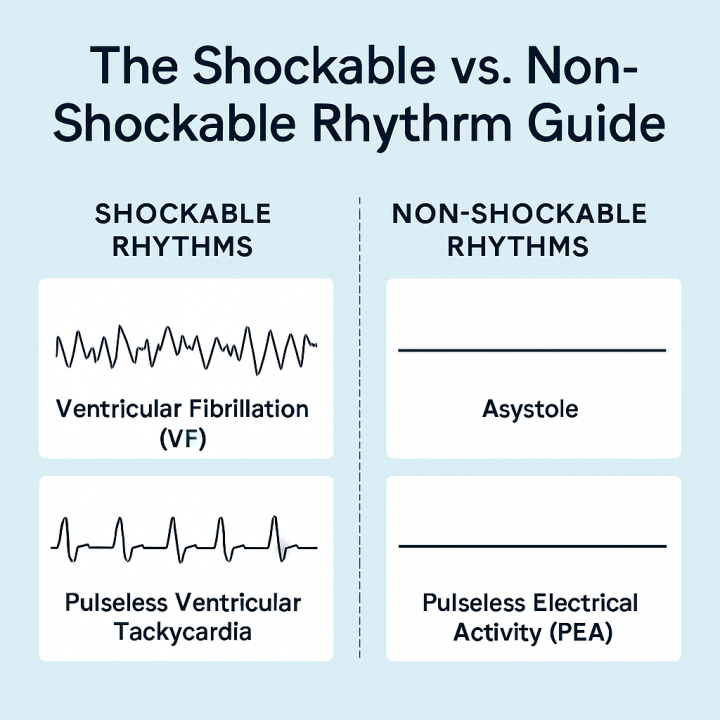
Understanding the difference between shockable and non-shockable rhythms is crucial in Advanced Cardiovascular Life Support (ACLS). This distinction helps determine the right intervention during cardiac arrest, and knowing it can make all the difference when seconds count.
What Are Shockable Rhythms?
Shockable rhythms are abnormal heart rhythms that can be treated with defibrillation (a controlled electrical shock). The goal is to reset the heart’s rhythm to a normal pattern.
There are two shockable rhythms:
- Ventricular Fibrillation (VF)
A chaotic and disorganized rhythm that results in no effective heartbeat. - Pulseless Ventricular Tachycardia (VT)
A fast, organized rhythm without a pulse. Though it looks more structured than VF, there’s no effective circulation.
What Are Non-Shockable Rhythms?
Non-shockable rhythms do not respond to defibrillation. Treatment focuses on high-quality CPR and identifying reversible causes.
There are two non-shockable rhythms:
- Asystole
A flatline or absence of electrical activity in the heart. It’s one of the most serious signs of cardiac arrest. - Pulseless Electrical Activity (PEA)
Electrical activity is present, but there’s no mechanical heart function (no pulse).
Key Differences at a Glance
| Rhythm Type | Examples | Treatment |
|---|---|---|
| Shockable | VF, Pulseless VT | CPR + Defibrillation + Epinephrine |
| Non-Shockable | Asystole, PEA | CPR + Epinephrine + Identify & Treat Causes |
Why It Matters
Correctly identifying the cardiac rhythm determines your next steps. Delivering a shock to a non-shockable rhythm won’t help—and delays other lifesaving measures. That’s why rhythm interpretation is one of the most essential ACLS skills.
How to Remember
Here’s a simple mnemonic:
“V-shock” — If the rhythm starts with V (VF or VT), it’s shockable.
Practice interpreting ECG rhythms during your ACLS training, and always follow the latest guidelines from the American Heart Association.
